
蛇蝎美人第二季
生意社基差率分布年度监测(2022/09/14)_正态分布_周期_我的网站

A |

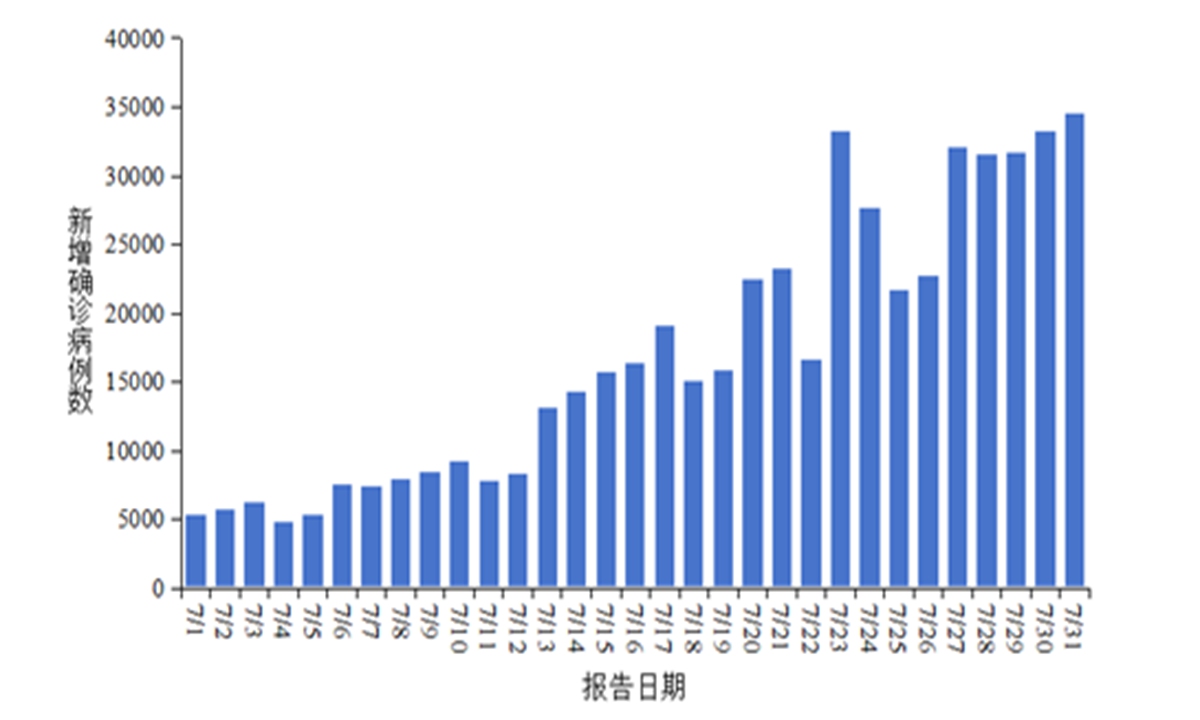
China reported 522,000 newly confirmed COVID-19 cases in July, including 487 severe cases and one related death with cases showing a fluctuating upward trend, China's national disease control authority said.
The current uptick in infections represents another regular cyclical wave, with its severity comparable to surges seen in the past two years. The upward growth curve has slowed markedly, and the country is now on the plateau phase of this epidemic peak, said the Chinese Center for Disease Control and Prevention (Chinese CDC) on Thursday.
All tested infection samples were confirmed to be the Omicron variant, with the NB.1.8.1 strain and its sublineages accounting for the majority of circulating cases, the Chinese CDC said.
A Beijing-based respiratory disease specialist told the Global Times that waning population immunity, continued virus mutations that weaken existing antibody protection, and increased summer travel have contributed to the recent modest rise in infections. However, there is no evidence that the virus has become more pathogenic. Nationwide infections appear to be nearing their peak and case numbers may begin falling in late August.
According to sentinel hospital surveillance data, from June 29-July 5 to July 27-August 2, the proportion of influenza-like illness among all outpatient and emergency visits at China's 1,041 COVID-19 and influenza sentinel hospitals edged up with slight fluctuations, standing at 4.3 percent, 4.4 percent, 4.5 percent, 4.4 percent and 4.5 percent, respectively.
During the same period, the COVID-19 positivity rate among patients with influenza-like illness in outpatient and emergency departments rose for consecutive weeks.
Several factors drove the fluctuating rise in COVID-19 cases in July. Population immunity has waned, as more than six months have passed since the last major wave of infections for most people, while continued SARS-CoV-2 mutations have reduced the protection provided by existing antibodies, Li Tongzeng, a respiratory disease medic from Beijing You An Hospital to the Capital Medical University, told the Global Times on Friday.
These factors, combined with increased travel and population mobility during the summer vacation, contributed to the recent small-scale surge. Based on patterns observed in recent years, COVID-19 infections tend to rise every six to eight months as population immunity declines, said Li.
The expert noted that while the virus continues to mutate, there is no evidence that it has become more pathogenic. Clinical data show that most patients develop only mild symptoms, with very few progressing to pneumonia or requiring hospitalization.
The Chinese CDC noted on Thursday that since COVID-19 was reclassified as a Category B infectious disease under Category B management, it has evolved into a prevalent, recurring respiratory infectious disease in China, with one to two epidemic fluctuations occurring nationwide each year.
Li also noted that residual immunity from previous infections also helps reduce disease severity, with most reinfections presenting as mild upper respiratory symptoms that resolve within about a week. The single COVID-related death reported nationwide in July further indicates that the current fatality rate remains very low.
Judging from historical epidemic patterns and current case growth trajectories, national infection figures may begin to decline in late August. Nationwide case numbers are now nearly at their peak, with declines already observed in some regions, said Li.
The Chinese CDC also said on Thursday that surveillance had not detected any variants posing major public health risks, nor had the current wave caused notable disruptions to the healthcare system.
The public is advised to take appropriate protective measures, including wearing masks when necessary, maintaining good personal hygiene, adopting healthy lifestyles and getting vaccinated as recommended.
。
原标题:生意社基差率分布年度监测(2022/09/14)生意社生意社定义:基差率=主力基差/现货价格×100%。据生意社对基差率10年以上的监测发现,较长周期内基差率符合正态分布,且具有以下的特征:1、基差率变化有一定的趋势;2、基差率放大到一定程度必然回归。生意社测算了各商品期货的最新基差率,在不同周期内的分布(见以下各表)。基于正态分布理论:1σ外(表示基差率分布在平均值±1个标准差之外),投资机会较大;2σ外投资机会更大。
注:1σ外,表示基差率分布在平均值±1个标准差之外。2σ外,表示基差率分布在平均值±2个标准差之外。分布在1σ内的,则不予标记(即为空)。猜你喜欢 1.生意社:库存低位 上半年豆油棕榈油居高不下 2.生意社:美经济数据利好&OPEC政策悬而未决 油价升至两年半新高 3.生意社:二季度正丁醇行情大涨33% “阅读原文”查看更多↓↓↓ 返回搜狐,查看更多责任编辑:
。
B |
2022-09-13基差率在1年内的分布| 商品名称 | 当日基差率 | 均值 | 分布 |
| 大豆(期) | 5.80% | -0.67% | 1σ外 |
| 玉米 | -2.03% | -0.98% | |
| 玉米淀粉 | 3.19% | 6.62% | |
| 苯乙烯 | 5.58% | 1.91% | |
| 乙二醇 | -2.31% | 1.66% | 1σ外 |
| 铁矿石(澳) | 6.23% | 12.81% | 1σ外 |
| 冶金焦 | 1.23% | -4.16% | |
| 鸡蛋 | 22.45% | 5.89% | 1σ外 |
| 炼焦煤 | 20.25% | 13.30% | |
| LLDPE | -0.35% | 1.59% | |
| 生猪 | -0.21% | -6.52% | |
| 豆粕 | 18.12% | 10.25% | 1σ外 |
| 棕榈油(期) | 8.28% | 14.44% | 1σ外 |
| 液化气 | 5.30% | 6.13% | |
| PP(拉丝) | 1.20% | 0.82% | |
| PVC | -1.07% | 2.04% | |
| 大豆油 | 10.71% | 6.61% | 2σ外 |
| 皮棉 | 8.09% | 6.04% | |
| 棉纱32S | 19.41% | 10.74% | 1σ外 |
| 玻璃 | 3.19% | 6.82% | |
| 甲醇 | -0.76% | -0.42% | |
| 菜籽油 | 17.09% | 5.90% | 2σ外 |
| 涤纶短纤 | 3.48% | 4.45% | |
| 小麦 | 3.83% | 9.17% | |
| 菜籽粕 | 18.47% | 7.84% | 1σ外 |
| 油菜籽(期) | 10.31% | 2.47% | 2σ外 |
| 重质纯碱 | 17.37% | 9.41% | |
| 硅铁 | -9.01% | -2.20% | 1σ外 |
| 锰硅 | -3.79% | -0.55% | |
| 白糖 | 3.51% | -0.66% | 1σ外 |
| PTA | 14.26% | 2.23% | 2σ外 |
| 尿素 | 3.07% | 7.27% | |
| 动力煤 | 1.33% | 22.53% | 2σ外 |
| 铜(期) | 1.11% | 0.71% | |
| 铝(期) | -0.34% | -0.11% | |
| 锌(期) | 2.33% | 1.12% | 1σ外 |
| 铅(期) | -0.18% | -0.14% | |
| 镍(期) | 2.10% | 3.14% | |
| 锡(期) | 3.21% | 2.24% | |
| 黄金 | 0.03% | -0.29% | |
| 白银 | -0.53% | -0.75% | |
| 螺纹钢 | 4.85% | 3.44% | |
| 线材 | -8.62% | -0.54% | 1σ外 |
| 热轧板卷 | 3.06% | 2.58% | |
| 不锈钢 | 0.60% | 4.69% | 1σ外 |
| 燃料油 | 57.40% | 43.97% | 2σ外 |
| 沥青 | 13.95% | 4.35% | 1σ外 |
| 天然橡胶 | -5.63% | -5.06% | |
| 针叶木浆 | 9.33% | 2.39% | 1σ外 |
| 小麦(强) | -5.06% | -7.30% |
Current article:http://www.liawucunsainantaonao.sbs/news/20260826_7635485.htm
Published on:07:24:08
最新文章
- 迪萨西:水晶宫正朝着很好的方向发展,这是我继续生涯的理想之地
- 九月德比燃岭南!2026职业男篮挑战赛重磅来袭
- 医保基金即时结算改革目标均突破90%
- 0比3不敌北京国安遭遇“开门黑”,但申花新帅米洛耶维奇“满意”球队表现
- Typhoon Dolphin to move inland, bringing heavy rain to multiple regions
- 吹糖人:舌尖上的传承
- 道路改造换新颜 铺就民生“幸福路”
- 精准帮扶育新站 深耕片区显担当
- Israel Reportedly Seeks US Go-Ahead to Provide Arab Gulf States With Laser Weaponry
- 消息称华为 Pura X View 阔直板手机搭载麒麟 9030S 处理器,现阶段全系采用 12GB 运存
标签云
热门文章
- 台湾加权股价指数收涨0.91%
- Ex-Tory Lawmaker: UK’s RAF Should Recruit the Best Irrespective of Sex & Ethnicity
- Chinese students take over kitchen during summer holiday
- 从阿里官方服务商到全链路跨境平台,锦泰宏十年深耕铸就外贸服务标杆
- 【侍ジャパン】5回まで無安打、前日13得点から一転、鷹投手陣に沈黙 6回に中山礼都が初安打
- 生意社基差率分布年度监测(2022/09/14)_正态分布_周期
- 河南警察3岁女儿被拐,苦寻全国23年无果,结果却发现女儿在对门
- 威尼修斯连续两个决赛做贡献 已16次助攻本泽马
- 戴尔G系列“轻追击”游戏发布:窄边框OLED屏幕
- 财政部:1-7月全国一般公共预算收入143696亿元,同比增长5.8%