斗鱼
国家卫健委:9月13日新增新冠肺炎本土“196+762”_我的网站

一 |
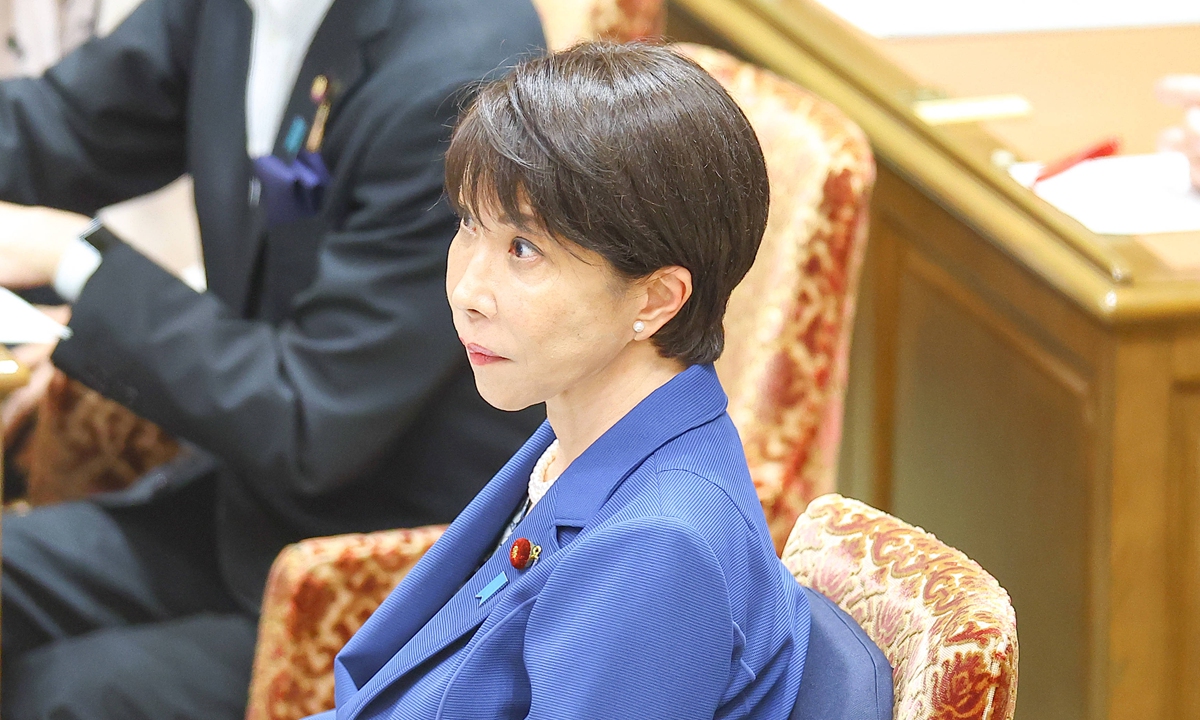
Due to concerns about fueling tension with China and South Korea, Japanese Prime Minister Sanae Takaichi is considering refraining from visiting the notorious Yasukuni Shrine, a symbol of Japanese militarism and wartime aggression, to mark the anniversary of Japan's unconditional surrender in World War II (WWII) on Saturday, Japanese media outlet Kyodo quoted sources familiar with the matter as saying on Wednesday.
Chinese experts said even if Takaichi forgoes a visit to the notorious shrine, the potential decision is merely driven by political calculations and diplomatic maneuvering, and could not be interpreted as a shift in her right-wing stance or as a sign of remorse over Japan's wartime aggression.
Such a visit to the shrine by Takaichi, a conservative known for her hawkish foreign policies, would certainly fuel tensions with China and create a rift in relations with South Korea, two countries that suffered under Japan's wartime military atrocities, Kyodo News reported.
Takaichi regularly visited the shrine before, even while serving as a Cabinet minister. But she has not visited the shrine since becoming leader of the ruling Liberal Democratic Party and prime minister in October, according to Kyodo news.
Chief Cabinet Secretary Minoru Kihara said at a press conference on August 7, when asked about a possible visit by Takaichi to the shrine around the anniversary, that "it is a matter for the prime minister to decide appropriately on her own," according to Japan's Jiji Press.
A source close to Takaichi told the Jiji that, "I don't think the prime minister will visit Yasukuni Shrine. It would complicate relations with South Korea."
Japan's Asahi TV reported that Takaichi may forgo the visit because she believes it is necessary to avoid triggering diplomatic tensions with South Korea, as well as with China.
A visit to the notorious shrine by a sitting Japanese prime minister would be a serious political incident, as it would reflect the leader's attitude toward Japan's wartime aggression and broader historical issues. Even if Takaichi chooses not to visit the shrine, it would not signal a retreat from her right-wing stance or a change in her views of Japan's wartime aggression against other countries, Lü Chao, an expert on Korean Peninsula issues at the Liaoning Academy of Social Sciences, told the Global Times. Rather, he said, the decision would largely reflect political calculations and diplomatic maneuvering.
Lü added that Takaichi could still make other symbolic gestures on the anniversary to cater to Japan's right-wing forces, whose support helped propel her to power. Such a move, he said, would underscore that her views of Japan's wartime history remain unchanged and serve as a reminder to neighboring Asian countries to remain vigilant about Japan's political direction.
Reporting on Takaichi's possible decision to forgo a visit to the shrine, South Korean newspaper Chosun Ilbo said on Wednesday that Takaichi had regularly visited the Yasukuni Shrine. "In the Liberal Democratic Party leadership election held in October last year, Takaichi also said that if appointed prime minister, she would visit the Yasukuni Shrine, noting that such visits should not become a diplomatic issue." However, since then, Takaichi has not visited in person and has only dedicated offerings in a private capacity, per the report.
In April, after Takaichi sent a ritual offering to the notorious Yasukuni Shrine, Chinese foreign ministry spokesperson Guo Jiakun said that China firmly opposes and strongly condemns Japan's latest negative moves related to Yasukuni Shrine and has lodged strong representations and protests with the Japanese side.
The Yasukuni Shrine is a spiritual tool and symbol of Japanese militarists responsible for the war of aggression. It is in fact a shrine for war criminals, noted Guo.
No sitting prime minister has gone to Yasukuni since Japan's late leader Shinzo Abe did so in 2013, drawing strong criticism from neighboring Asian countries.
Beyond Takaichi herself, some Japanese politicians and lawmakers have kept visiting the Yasukuni Shrine, triggering fierce pushback from peace advocates in Japan and the international community, Liu Jiangyong, a professor at the Institute of International Studies of Tsinghua University, told the Global Times, noting that such visits not only reflect the long-standing right-wing stance of Takaichi and other conservative politicians on historical issues, but also lay bare Japan's enduring militarist remnants.
Also in April, members of the conservative solidarity association, a group of conservatives in Japan's Liberal Democratic Party, and 166 Sanseito lawmakers from the Diet and local assemblies visited the Yasukuni war shrine.
In response, Lin Jian, Chinese foreign ministry spokesperson said that China strongly deplores and condemns such acts.
"By visiting the Yasukuni war shrine that honors Japanese Class-A war criminals year after year, these Japanese politicians seek to reverse the just verdict on Japanese aggression, and hereby whitewash Japan's war crimes and revive militarism. The Chinese people and people elsewhere who suffered under Japanese aggression will never accept that, neither will anyone in the world who stand for peace. As Japanese neo-militarism keeps gaining strength, the international community must stay on high alert and stand ready to stamp it out before it could wreak havoc in the region," said Lin.
。

二 | 累计确诊病例23169例,累计治愈出院病例22606例,无死亡病例。

三 | 累计追踪到密切接触者5751134人,尚在医学观察的密切接触者238780人。31个省(自治区、直辖市)和新疆生产建设兵团报告新增无症状感染者825例,其中境外输入63例,本土762例(贵州246例,西藏129例,四川83例,江西55例,广西51例,黑龙江44例,山东35例,新疆25例,湖北18例,河北16例,陕西14例,甘肃13例,内蒙古11例,辽宁10例,天津4例,青海4例,广东3例,湖南1例)。当日解除医学观察的无症状感染者1241例,其中境外输入71例,本土1170例(海南371例,西藏276例,黑龙江139例,江西51例,青海48例,新疆48例,河北34例,山东34例,甘肃24例,辽宁23例,湖北20例,广东20例,陕西16例,河南14例,四川13例,广西7例,贵州7例,内蒙古6例,吉林5例,重庆5例,浙江4例,福建2例,江苏1例,湖南1例,兵团1例);当日转为确诊病例63例(境外输入5例);尚在医学观察的无症状感染者21511例(境外输入679例)。

四 | 累计收到港澳台地区通报确诊病例6157418例。其中,香港特别行政区401942例(出院79100例,死亡9820例),澳门特别行政区793例(出院787例,死亡6例),台湾地区5754683例(出院13742例,死亡10329例)。
Current article:http://www.liawucunsainantaonao.sbs/news/20260826_2228.xls
Published on:18:04:11
- 1台风“沙德尔”凌晨升级为超强台风级
- 2“发挥好支部的战斗堡垒作用”
- 3“甲醛白菜”风波引恐慌 山姆盒马等上线白菜质检标签
- 4新一轮涨价潮或开启 功率半导体龙头率先涨停 融资客大举买入的概念股曝光
- 5能载客168人 视野开阔还是纯电动的 “千岛湖启程号”游船通过验收
- 6俄罗斯人在沃夫昌斯克市俘虏了多达40名平民
- 7政声直达|河北24项高频海事政务事项下月起将实现全省通办
- 8Zhuque-3 chief commander reveals cause of Y1 rocket's failed recovery, saying its data contributed to Y2's success
- 9西门子能源将分拆工业转型部门,拟保留少数股权
- 10Off-duty St. Louis officer accused of shooting at trick-or-treating event no longer employed
- 11开展“世界卫生日”宣传活动
- 12《传奇之梦》复古合击8月24日删档首测,搜打撤玩法重磅首推!
- 13Texas Governor Orders Arrest of Illegal Migrants as He Accuses Biden of ‘Refusing to Do His Job’
- 14多地彩票店刮刮乐售空,福彩体彩回应:供不应求,无管控通知
- 15全新Jeep自由光官图 刷新认知 放弃流线设计 回归经典
 “首来族”过半 台青山西古建中触摸中华文明根脉
 王群大使:中方主张下,一些国家劫持国际原子能机构理事会图谋被挫败_三国_合作
 《巫师3:狂猎 重制版》官宣!9月29日发售:老玩家免费升级
 三星:2021年最早大规模生产3nm工艺
 中川翔子、産後初のイベントへ!双子“しましまブラザーズ”の腕組み姿に反響
 魏牌全新中大型SUV亮相:造型过于狂野被吐槽 高管回应马上改
- 12025香港车博会6月12日开幕 新车/峰会/逛展亮点抢先看
- 2Palak Muchhal Reacts to Palash Muchhal and Smriti Mandhana's Wedding Debacle - Exclusive
- 3大学生篮球联赛“黑马”重庆文理学院队是如何炼成的?
- 4探营“冰丝带”|人形机器人在运动会前如何备赛训练?
- 5一加五正式推出Android P-based Hydrogen OS 9.0系统
- 6美对伊朗施压 外交部:军事手段和制裁施压无助于解决问题
- 7六股河口外海砂项目迈入规模化开采阶段
- 8兴业银行38周年品牌焕新 “以专业,共兴业”,兴业银行38周年品牌焕新 “以专业,共兴业”
- 9谷歌公布2023年度搜索报告,新西兰人今年格外困惑和好奇
- 10欢乐过寒假 安全不放假——郑州商学院附属点点幼儿园2025年寒假放假通知及温馨提示
- 11mRNA疫苗太慢,狗主人痛失爱犬!全球首个AI定制狗癌疫苗来了
- 12制动控制模块软件存在偏差/共计2辆 极星Polestar 2开启召回
- 13受太平洋鼹鼠蟹启发的机器人可以用织物腿来实现垂直挖洞
- 14增重9公斤!76人总经理:埃奇库姆目前身体非常壮实 新赛季入选全明星也不意外
- 15对冲基金加码看空美元