谍影重重
After the desert turns green, harder work begins_我的网站

A | 从8月28日起,新加坡人可以使用未来技能发展学分订阅在线学习平台Coursera和Udemy Business的在线课程。
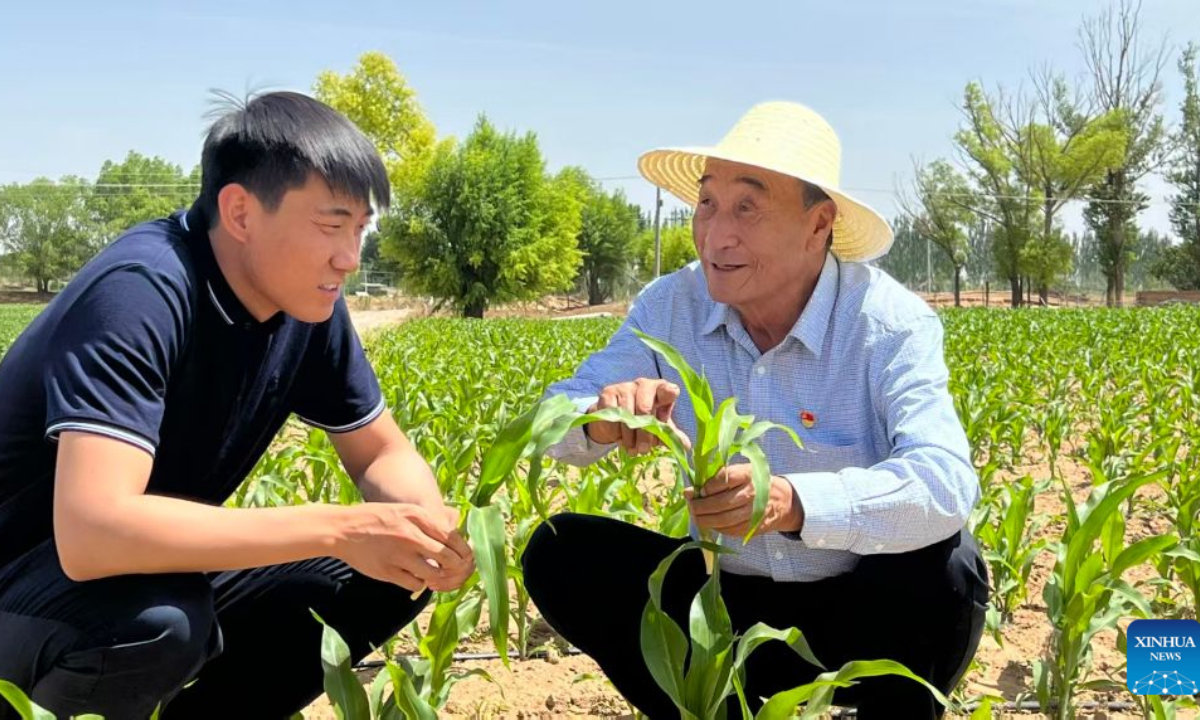
Shi Jianyang (L) and his grandfather check the growth of crops on a farmland near a forest area along the Maowusu Desert in northwest China's Shaanxi Province in 2026.(Xinhua)A drone sweeps above the pine forest, sending images of the woods to a screen below. Under the trees stands Shi Jianyang whose grandfather and hundreds of villagers came 40 years ago with shovels and saplings to stop advancing sand.
At 29, Shi belongs to a new generation of desert-control workers equipped with drones, machines and remote irrigation systems. An earth auger can now do in a day what once required about 200 laborers, while a single phone can control drip irrigation across more than 1,000 mu (about 66.67 hectares) of woodland.
For the older Shi's generation, the challenge was getting trees to survive in moving dunes. For the grandson, it is figuring out how to make those forests healthier and more resilient for decades to come.
Their story captures a broader shift in desert control along the southern edge of the Maowusu Desert in northwest China's Shaanxi Province: turning shifting sand into forest was only the beginning.
In 1986, Shi Guangyin, Shi Jianyang's grandfather, led more than 300 villagers into Langwosha, a sandy area in Dingbian County in Yulin City. He had raised 60,000 yuan (about 17,377 U.S. dollars at the time) by selling his family's 84 sheep and borrowing from relatives and banks to contract 3,500 mu of barren sandy land.
The early setbacks were severe. Strong winds destroyed about 90 percent of the saplings in the first year, and about 80 percent of those planted the following year failed to survive.
After seeking advice from forestry experts, Shi and the villagers laid out checkerboard-shaped barriers on windward slopes to hold the sand in place, then planted trees, shrubs and grasses within them. Sapling survival rates rose to about 80 percent.
Over the next four decades, Shi and those working alongside him treated 250,000 mu of sandy and saline-alkali land, with more than 53 million trees and shrubs taking root.
Greening the Maowusu Desert is part of a much larger national undertaking. It is one of the three major battlefronts of China's Three-North Shelterbelt Forest Program, a decades-long effort to curb desertification across northern China.
China has made desertification control a national ecological priority. Since 2023, the country has stepped up efforts under the program, with greater emphasis on systematic restoration and on consolidating earlier gains.
Decades after the first trees took root, a new challenge emerged. Poplars planted decades ago for their rapid growth began reaching the end of their life cycle, with large numbers of trees dying, while forests dominated by a single species were more vulnerable to pests and disease.
Making a forest was one challenge. Keeping it healthy for another generation is another.
Shi Jianyang grew up watching his grandfather and father work to hold back the sand. His father, Shi Zhanjun, spent years planting trees alongside Shi Guangyin before dying in a road accident in 2008 while transporting saplings.
As a boy, Shi Jianyang sometimes resented the work that had taken his father. He spent summer holidays in makeshift tents in the sandy land, eating meals gritty with sand. During planting season, his father would return home with painful blisters in his mouth.
Yet he eventually chose forestry himself.
After studying forestry technology in university, Shi returned home in 2020 and began working in desert control. His team, initially made up of just seven or eight young locals, later brought in university graduates with expertise in soil science, landscaping and pest control.
The younger generation faced a different question: not simply how to make trees survive, but how to make a forest last.
Shi and his team spent more than 40 days in a 5,000-mu woodland setting up sample plots, measuring rainfall, studying soil microorganisms and tracking tree lodging. They proposed renewing aging forests with better-planned forest structures and expanded the planting of Mongolian pine, a long-lived evergreen species that had been successfully tested locally.
To date, about 50,000 mu of land has been planted with Mongolian pine. As some trees fail to survive and require replacement in subsequent planting seasons, the cumulative area of planting operations has reached about 65,000 mu.
Technology has also changed daily work. Drones patrol forests from the air, mechanized equipment dig planting pits, and irrigation can be managed remotely. Sapling survival rates, which Shi Guangyin's generation had raised to about 80 percent through improved sand-control and planting methods, have climbed further to about 92 percent with greater mechanization and more precise management.
Shi said the changes can be felt on the ground. Strong sandstorms have become rare, winds are weaker inside the forest, and the ground stays moist longer after rain. Summer days beneath the trees also feel cooler, while morning dew appears more often. The changes lead him to rethink desert control.
His approach also reflects a broader effort in China's desert regions to link ecological restoration with local livelihoods, giving communities a stronger economic stake in protecting restored land.
With his grandfather's support, Shi and his team have been looking for ways to make better use of the restored land as ecological conditions improve. They have developed potato seedlings suited to sandy soil, promoted greenhouse farming, and set up a livestock cooperative, while increasingly growing potatoes, watermelons and peppers on land once prone to losing water and nutrients.
Shi has also turned to livestreaming e-commerce to market potatoes and other local farm produce, while developing forest-based health and leisure projects. More than 2,000 local residents have seen their incomes rise steadily as farming, livestock breeding and other businesses have developed.
"We used to fear the sand and keep away from it. Now we understand it and know how to make use of it," Shi Guangyin said. "Today, there are opportunities to make a living everywhere in this sandy land."
Across Yulin, forest coverage has risen from 1.8 percent in 1949 to 34.8 percent, while shifting dunes that once encroached on villages have been brought under control.
For Shi Jianyang, however, the green landscape is not proof that the work is finished. "Planting a tree is not difficult," he said. "The difficult part is looking after it for decades."
The grandfather generation learned how to stop the sand. The young generation is learning how to make what grew there last.
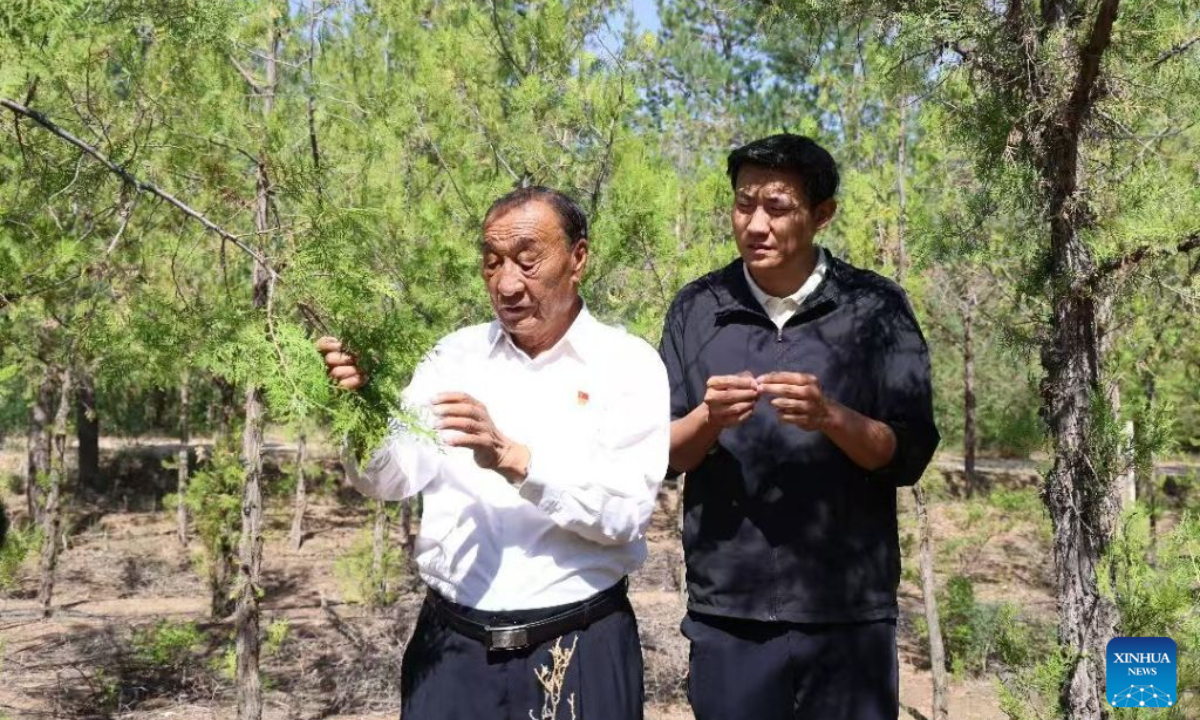
Shi Jianyang (R) and his grandfather check tree growth in a forest area in Dingbian County in Yulin City, northwest China's Shaanxi Province in 2026. (Xinhua)
。

B | 这一举措旨在通过为学习者提供更广泛的学习机会,进一步提升国民的技能水平,尤其是在数据科学和人工智能等高需求领域。1. SkillsFuture新功能:多平台学习机会新加坡人现在可以使用未来技能发展(SkillsFuture)学分支付Coursera和Udemy的订阅费,获取超过30,000门课程。这些课程涵盖了数据科学、商业管理、人工智能等领域,为学习者提供了广泛的选择和便利。Coursera订阅包括7,700多门课程和130个专业证书,而Udemy订阅则提供了27,000门课程。学习者可以通过未来技能发展门户申请并激活这些课程订阅,全年均可学习。

C | 这项新举措为新加坡学习者提供了更多的技能提升途径,帮助他们在快速发展的数字经济中保持竞争力。来源:redants2. 技能提升与全球排名根据Coursera的全球技能报告,新加坡学习者在商业、技术和数据科学技能方面表现优异,全球排名第12,亚太区排名第二。

D | 随着2024年生成式人工智能课程报名人数的增加,新加坡人对这些课程的需求也持续增长。新加坡学习者特别关注与金融相关的技能,其中四项技能跻身前十大热门课程。这一趋势与国家人工智能战略2.0的目标相符,显示出新加坡在培养高技能人才方面的坚定决心。Coursera预计,到2024年,新加坡学习者将在生成式人工智能课程的入学人数中占据全球前十的位置,进一步推动该国技能提升。来源:3. 学习机会与职业发展通过使用未来技能发展学分,新加坡学习者不仅能够获取新技能,还能通过这些课程提升职业发展机会。Coursera数据显示,参与专业证书课程的学习者,薪资平均增加20%,许多人还获得了面试机会。Udemy与共和理工学院的合作也为新加坡人提供了更多学习机会,特别是在商业、技术和专业技能方面。这些在线课程旨在帮助学习者释放潜力,创造更多职业机会,满足不断变化的市场需求。

E | 来源:新加坡政府通过这些举措,进一步巩固了技能创前程计划作为国家技能提升计划的核心作用,助力国民在快速发展的全球经济中立于不败之地。

F | 参考资料:1. SkillsFuture credits can be used for more than 30,000 new online courses from Aug 28,海峡时报。
Current article:http://www.liawucunsainantaonao.sbs/list_isgt/chib4ea.htm
Published on:06:52:57