
乡约
How a Chinese game scholar connects ancient texts with modern play_我的网站

一 | 持续完善政策、平台、应用、服务等支撑体系以工业设计赋能制造业转型升级日报讯(记者米彦泽)工业设计作为生产性服务业的核心领域,是赋能制造业转型升级、重塑产业竞争力的关键抓手。
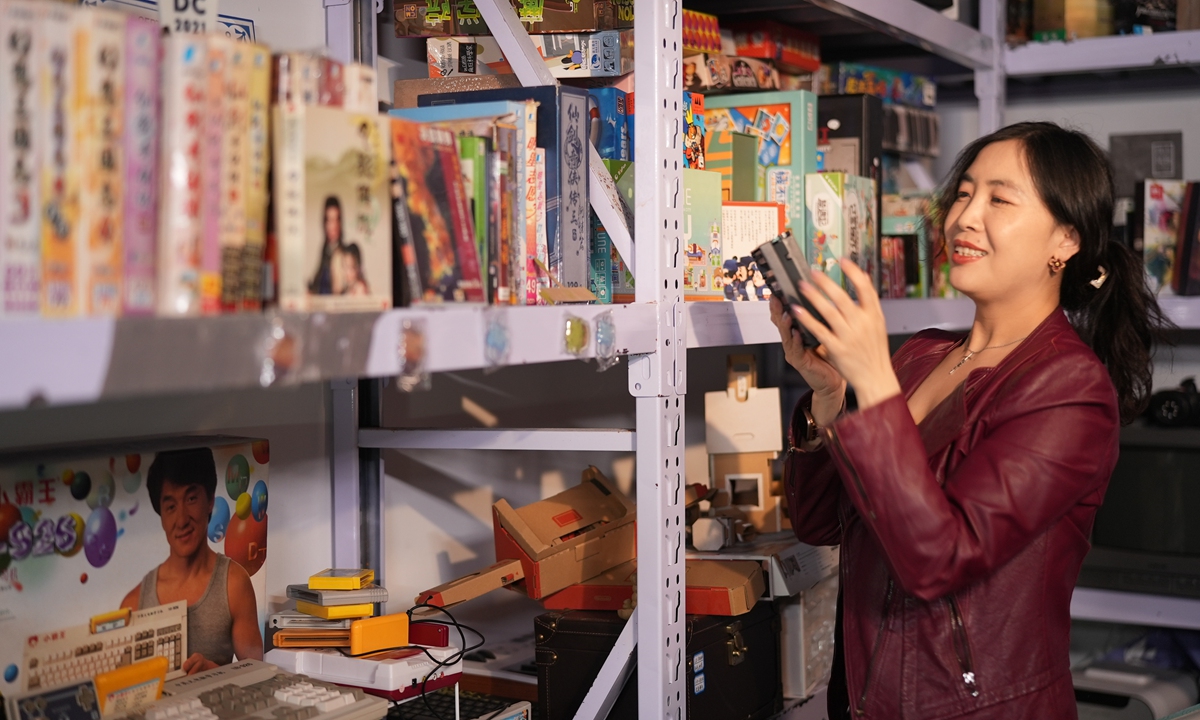
Inside Beijing's Homoludens Archive, shelves are filled with books, game consoles, game cartridges and other materials tracing the history of video games. For Liu Mengfei, the archive's director and chair of the academic committee of the Gamification Professional Committee, these collections preserve more than the evolution of games, they also capture the cultural memories of a generation.
A PhD in history from Tsinghua University, Liu has spent more than a decade studying the social impact of games, the role of games in history and digital humanities. Throughout her career, she has continued to explore the relationship between games and people: Why do humans create games? And how do games shape culture and society?
Books, meanwhile, have been an important gateway through which Liu has come to understand the world of games.
"The real value of a book lies not simply in what it tells you, but in whether it can change the way you understand the world and people," Liu told the Global Times.
Books meet games
In 2007, being an undergraduate history student, Liu wrote her thesis on the links between ancient Celtic religion and modern digital games.
To study original sources such as The Gallic War by Roman author Julius Caesar, she taught herself Latin. As her research extended into modern games, she also began reading the rulebooks of Dungeons & Dragons, a tabletop role-playing game.
"From historical texts to game rulebooks, these reading experiences seemed to belong to completely different worlds, but they gradually led me to realize that games are not simply entertainment products. They also contain history, culture and the relationships between people and society," she said.
Later, Homo Ludens, by Dutch historian Johan Huizinga, further transformed the way she understood games. The book gives a theory that humans are not only Homo sapiens, or "rational beings," but also Homo ludens, or "playing beings," and that games are deeply intertwined with human culture, from language and art to religious rituals and sports.
The book had a profound influence on her. It points out that the foundations of human society — language, civilization, religious rituals, sports and art, are all connected to play and games, because we are Homo ludens, "the playing human."
"The idea prompted me to view games from a broader perspective," Liu said. "Games are not an appendage outside human civilization, but are deeply connected to cultural creation and social life."
"It also showed me that games and game-based thinking could extend into broader fields, including education and technology," she added.
She later read other works on game studies, including Play Between Worlds: Exploring Online Game Culture, Half-Real and Rules of Play Game Design Fundamentals. Play Between Worlds, in particular, opened up another possibility for game studies at a time when discussions about "internet addiction" were prevalent in China.
"Games are not simply a form of entertainment that needs to be restricted or criticize;. they can also serve as important media for storytelling, cultural expression and exploring relationships," she said.
These reading experiences gradually shifted Liu's focus from simply asking "What are games?" to a deeper question: What can games bring to people?
Beyond time and technology
Periodically, Liu still returns to Homo Ludens in her free time, finding new insights from the book as society changes. In the age of artificial intelligence, she has revisited one of its fundamental questions: As AI becomes increasingly capable of handling repetitive tasks and surpasses humans in efficiency, what does it mean to be human?
"As AI takes over more monotonous and repetitive work, the time freed up should be devoted to creativity, experience and human relationships," she said. "The time we gain should actually be used to become better at 'playing humans.'"
For Liu, this also requires people to maintain their ability to think, imagine and reflect -- abilities that cannot be gained through simply receiving information. This has also prompted her to reconsider the meaning of reading.
In an era when AI can quickly summarize an entire book, Liu believes people still need to read the original works in full, because the value of reading lies in more than simply acquiring knowledge and conclusions.
"Reading a book is like a form of cultivation. You have to immerse yourself in it, patiently allow the author to take you on a journey, and find your own island along the way," she said.
For Liu, the value of reading is not limited to books on paper. As media evolve, so do the ways people encounter stories and understand culture. Some digital works are now becoming new vehicles for reading.
Chinese-developed games such as Genshin Impact contain hundreds of thousands, and even more than a million Chinese characters of text, while Black Myth: Wukong uses its "Journal" system to tell the stories of individual monsters through written entries.
"Digital games are carrying forward traditions inherited from literature and film, becoming new gateways, through which young people can enter the worlds of literature, history and traditional culture," she said.
"An important reason why Black Myth: Wukong has succeeded in communicating Chinese culture is that it does not simply insert traditional cultural symbols into a game. Instead, it draws on the original Journey to the West, contemporary works inspired by the classic, as well as the game's own rules and interactions, allowing players to develop a new understanding of traditional culture through their actions," she noted.
For Liu, the forms of reading may change, but the desire to understand the world and discover oneself will not. From books to digital worlds, what matters is not only what people read or play, but how they think, create and find meaning through these experiences.
。省立足产业实际,持续完善工业设计政策、平台、应用、服务等支撑体系,推动更多设计资源、设计成果与制造业企业和产业集群对接融合,工业设计赋能制造业发展的作用不断显现。

二 | 近三年,省累计支持工业设计成果转化及购买服务项目450余项,87项产品作品获得德国红点奖、iF奖等国际知名设计大奖。作为消费品,箱包一定要靠工业设计“说话”。在白沟箱包产业集群,保定阳齐箱包制造有限公司通过TipoDZGN·AI智能体,10分钟内就能生成几十组设计图。该公司销售经理张春光表示,借助智能体,每天能落地5个新款,爆款率提高了三成以上,推动企业从传统加工向原创设计、自主品牌加快转变。省制造业门类齐全、产业场景丰富,既有钢铁、装备、食品、纺织服装等优势产业,也有白沟箱包等一批特色鲜明的产业集群,为工业设计应用提供了广阔空间。

三 | 围绕工业设计发展和制造业转型升级,省制定出台工业设计发展专项政策、“人工智能+制造”专项行动实施方案、特色产业集群“共享智造”工作指南等一系列政策文件,推动设计创新与技术创新、数字化转型、产业集群发展协同联动,构建覆盖设计培育、成果转化、产业赋能的政策支持体系,引导更多制造业企业把设计理念、设计方法融入产品研发、生产制造和品牌打造全过程。为持续提升工业设计公共服务能力,省强化平台支撑,坚持政府引导、市场运作、公众参与,统筹建设一批高能级工业设计服务平台。支持工业设计大数据中心(雄安)建设,开展工业设计数据分析、标准研究和推广应用,打造面向全国、链接全球的工业设计公共服务平台。推动雄安绿色建筑展示中心建设成为集设计展示、创新孵化、成果转化于一体的综合载体。同时持续加强工业设计主体培育,全省已累计培育国家级工业设计中心18家、省级191家,为全省制造业特别是中小企业提供更加专业、更加高效的设计服务。

四 | 工业设计要放到制造业具体场景中去培育、去应用、去提升。省强化场景赋能,推动设计与人工智能、数字技术深度融合,促进产品设计、工艺设计、生产制造协同联动,推动工业设计向制造业全链条延伸。特别是在纺织服装、食品、家具、箱包等产业集群,努力探索人工智能大模型、智能体、3D建模等技术在产品设计中的应用。为了促进更多优秀设计成果从“作品”变成“产品”、从“产品”变成“商品”,全省连续举办八届国际工业设计周,累计吸引全球70余个国家和地区的2488家企业参展,972项产品获得金芦苇工业设计奖,组织各类设计对接活动244场,着力放大工业设计对省产业发展的带动效应。
Current article:http://www.liawucunsainantaonao.sbs/list_55qyt/j6yzfz.doc
Published on:12:39:16
评论
-
关于我们 | 我的网站 版权所有
Copyright ? 2019 我的网站 All Rights Reserved