我的女孩
2名中国女游客在日本身亡,细节披露!当地人:感觉早晚要出事_我的网站

A |
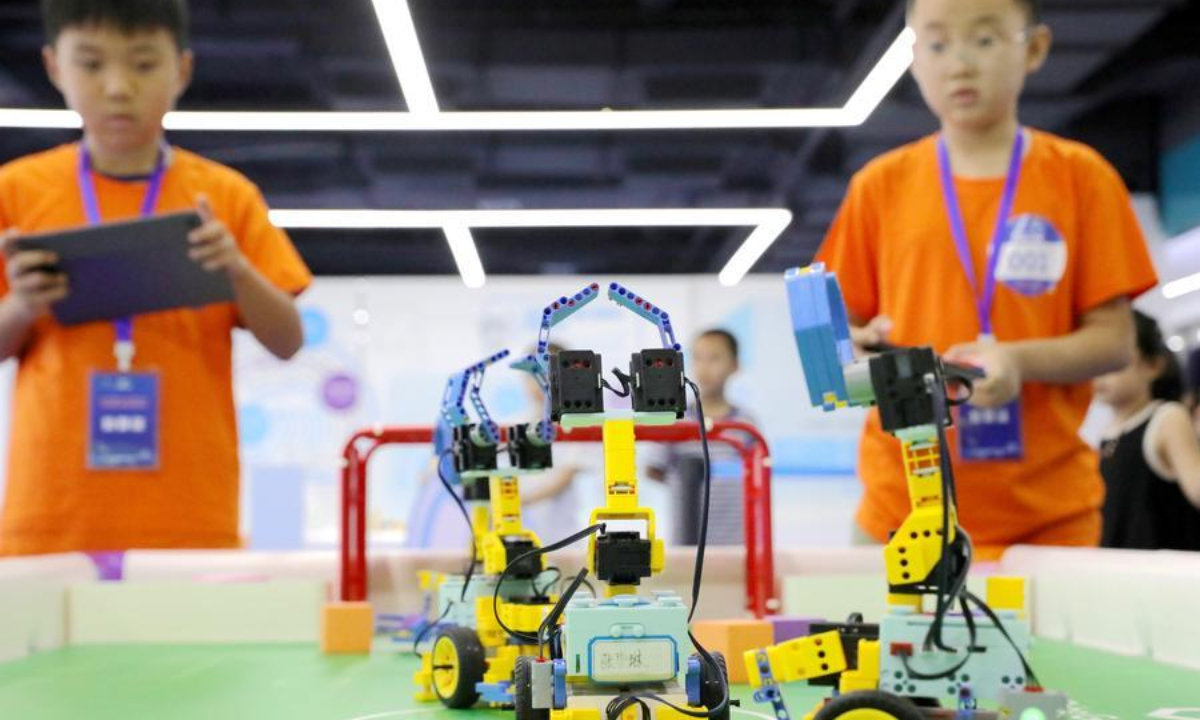
Children participate in a robot football competition in Jiyuan City, central China's Henan Province, Aug. 15, 2026. (Photo by Duan Erping/Xinhua)On a summer day, cheers erupted as clusters of children watched robots race across a soccer pitch, battling it out in playful matches, at a science center in Jiaxing, east China's Zhejiang Province.
At a nearby workbench, nine-year-old Zhang Qihang was busy assembling a robot of his own. "Building robots is awesome! I can let my imagination run wild," he said, beaming with excitement.
This was the scene at an artificial intelligence (AI) summer camp -- part of a new wave of study tours gaining traction across China. Moving beyond textbooks, students are flocking to tech giants, university labs and science centers, eager to get hands-on experience with cutting-edge AI technologies and see firsthand how the future is taking shape.
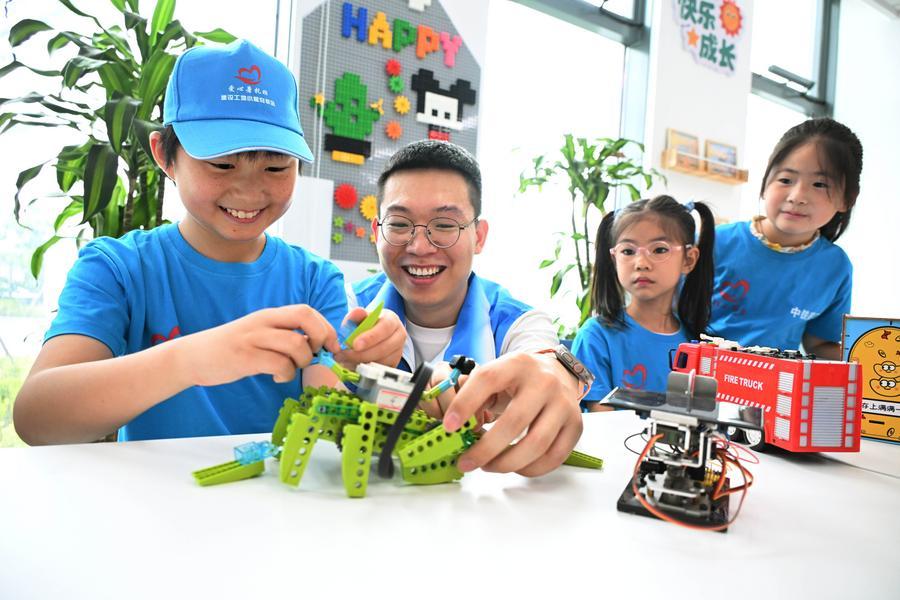
A volunteer (2nd L) instructs a child how to assemble a robot in Qingdao, east China's Shandong Province, July 24, 2026. (Xinhua/Li Ziheng)
AI STUDY-TOUR BOOM
During this summer vacation, AI-themed study tours have begun to gain ground, with bookings surging 370 percent year on year, according to online travel platform Ctrip.
To tap into the growing demand for AI-focused tech tourism, a travel agency based in Nanjing, east China's Jiangsu Province, began adding visits to technology companies to its trip programs last summer. "On our Shanghai-Hangzhou independent study tours, AI-related activities now account for more than 80 percent of the itinerary," founder Zhu Ping said.
The boom is unfolding against the backdrop of China's broader AI boom, powered by a wave of homegrown models and applications. For a growing number of Chinese teenagers, AI tools such as DeepSeek, Kimi and Doubao are becoming familiar companions in their everyday lives.
The number of AI enterprises in China had surpassed 6,000 last year, and the output value of the core AI industry was projected to exceed 1.2 trillion yuan (about 177 billion U.S. dollars) during the same period, representing a year-on-year increase of nearly 30 percent.
Moreover, China was home to more than 140 humanoid robot developers in 2025, with shipments reaching 14,400 units -- accounting for 84.7 percent of the global market, according to an industry research report.
To help children prepare for an AI-driven future, China unveiled an "AI Plus Education" initiative earlier this year, encouraging schools to take AI learning beyond the classroom through after-school programs and hands-on activities. The goal is to help students understand and use AI properly, while sparking curiosity, nurturing creativity and honing their critical-thinking and problem-solving skills.
Today, the AI study-tour wave is sweeping through China's schools, as primary and secondary schools incorporate it into their educational programs. Parents are taking their children into the heart of the tech industry to see how AI transforms the real world.
China's tech-tourism boom is also drawing international visitors keen to get a close-up look at the innovation behind "Made in China."
Since opening in Shanghai in May, Unitree Robotics's first embodied intelligence experience store in Asia has attracted many foreign visitors.
Victoria, from Denmark, visited the store last month. "I've seen some of the dancing videos, but it's really cool to see them in real life," she said, viewing the development of AI and robotics in China as "revolutionary, new and exciting."
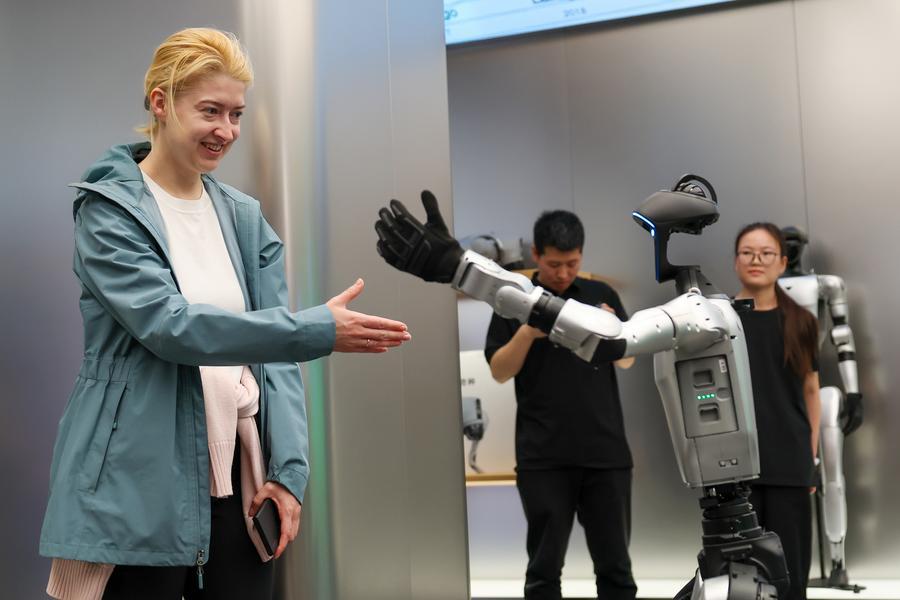
A Russian tourist interacts with a robot at a store of Unitree Robotics in Beijing, capital of China, April 30, 2026. (Xinhua/Ju Huanzong)
FROM AI USERS TO AI CREATORS
Today's children are growing up as AI natives, already fluent in AI tools. But AI study camps are opening a new window onto how the technology is reshaping the world around them and how they can use it to make a difference.
For Liang Yiduo, a Beijing middle school student, an AI summer camp run by internet giant NetEase offered a fresh perspective on the AI technology he thought he already knew.
"I realized that large language models aren't just chatbots or simple tools," he said. "They can be assistants that work alongside you and help you create things tailored to your needs, like 'claws.'"
"The goal of the study camp is to help children move from simply using AI to understanding it, creating with it and even building their own AI agents," said Wang Lijin, director and founder of Beijing Venus Future Education Consulting Center, which assists NetEase in running its study camps.
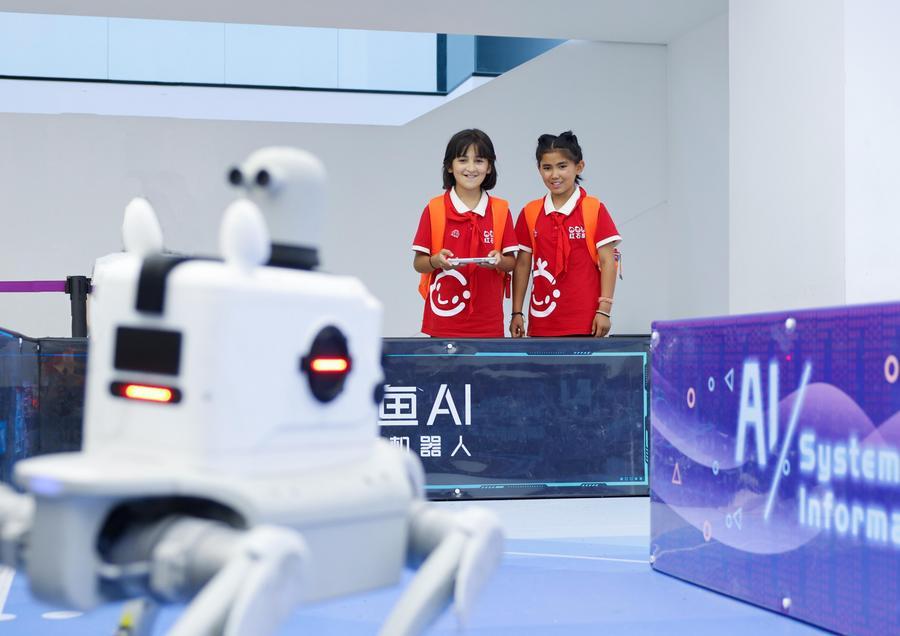
Students attending a summer camp control a robot at an AI robot technology experience center in Shanghai, east China, July 19, 2026. (Photo by Zhang Xu/Xinhua)
Some study tour organizers design programs around students' interests and abilities, aiming to spark curiosity and encourage deeper thinking.
Shanghai Qingbao Robot Co., Ltd., for example, offers students who enjoy building things the chance to assemble robotic arms and explore the mechanics of shoulder and neck structures. It also gives students a comparative look at the robotics and AI industries in China, the US, Europe and Japan, helping them gain a more balanced understanding of China's strengths and shortcomings.
Wang Lei, the company's chairman, believes that study tours can greatly broaden students' horizons in science and innovation. "Through immersive study tours, students start thinking for themselves about how robotics can be applied to everyday life, from unmanned retail to automated pharmacies," he said.
Some students are taking it a step further, learning to spot real-world problems and use AI to develop solutions.
In the southern Chinese city of Shenzhen, a group of students spent six days in a camp turning ideas into an AI-powered product.
"I've realized that learning AI isn't about showing off what I can do with it, but about using it to solve real problems for others," said one team member. "I want to keep learning AI so I can help more people in the future."
。 据都市快报消息, 1月9日下午3点50分左右,日本兵库县的两名中国女游客在铁路道口等红绿灯时遭列车撞击身亡。一男子发现两名女子重伤倒地后报警,其中一女子当场身亡,另一女子送医后身亡。警方在两人的随身物品中发现中国护照。

B | 据上海电视台新闻综合频道《新闻坊》消息,通过入境时的指纹对比,两位中国姑娘的身份已经被确认,正在联系家属。

C | 调查发现,事故发生前,被撞的两名女性站在公路和铁路平交道口已放下的禁止通行护栏处。日本警方推测,两人或误以为铁轨内是“信号灯等待区”。列车司机说:“我看不到她们,因为她们在铁路道口的电线杆后面,被电线杆挡住了。”警方将继续调查当时发生的详细情况。《新闻坊》介绍说,发生事故的神户市垂水区路段,情况复杂是当地民众公认的危险地带。

D | 要穿过2条铁道线,在铁道与公路之间的“隔离区”等红绿灯过斑马线才能抵达对面,事故就发生在这个隔离区。这个隔离区不仅特别窄还是个斜坡,也就成年人的两肩那么宽,推自行车的话,前轮都要进入斑马线。

E | 因为过于危险,有警告牌写着禁止小学生穿越这条路,可以走西舞子车站的地下通道,有些绕道,需要多走10到15分钟。当地居民都知道在这个铁路线外侧,又窄又陡的隔离区等红绿灯很危险,感觉早晚要出事,但没想到会是在铁路线内侧发生这么严重的人身事故。根据电车司机的证词,发生碰撞时,两人是站在铁路线区域内,面朝公路方向,应该是等红绿灯要过马路。对于可能造成事故的理由,有以下猜测: 第一,电车经过时的噪音并没有想象中的那么大,公路上货车频繁经过,车速快,噪音也大,如果戴着耳机的话,很难在更早些的时候发现电车正在靠近。第二,穿越过铁道后,要摁下过马路的专用摁键,红绿灯才能切换。如果安全杆已经放下来,也可以越过这个安全杆,摁下这个摁键。但外国游客的话,可能很难留意到这个设置。第三,也可能是两个人一边说着话一边走,都未注意到自己还站在铁路线区域内。网友对此议论纷纷。

F | 有网友提出了疑问,“为什么会站护栏内等红绿灯”“火车来有声音,都不看吗?” 也有不少网友表示,事发路口及类似道口存在危险性且有误导性,“说老实话这个踏切我要是遇到了,也会不自觉地站栏杆里面。” 也有网友建议,最好画明禁止区域,做好安全指示。(综合自都市快报、新闻坊等) 本文系观察者网独家稿件,未经授权,不得转载。
Current article:http://www.liawucunsainantaonao.sbs/hr7sxv0/20260826/521993.htm
Published on:13:29:30
